
Wilderness Reset: The Brutal Truth for Men Over 40

There’s a version of you that only shows up around mile six.
Not the guy who answers Slack messages before his coffee’s finished brewing. Not the guy juggling the job, the marriage, the kids who don’t call enough, and the parents who call too much. That guy’s been managing everyone’s expectations so long he forgot he had any of his own. The one who shows up at mile six is quieter. Slower to speak. He’s stopped performing — mostly because there’s nobody left out there to perform for, and the deer don’t care about your LinkedIn headline. That guy is exactly who a wilderness reset is designed to find. (If you’re new here, this is the whole premise of what we’re building.)
Most men over 40 haven’t met that guy in years. Some never have. They’ve been too busy optimizing a life they secretly can’t stand — which is precisely the kind of life a wilderness reset is built to interrupt.
The comfort that’s actually a cage
Here’s the part nobody wants on a motivational poster: the life you built to protect yourself might be the thing slowly suffocating you. The climate-controlled house. The same nine-minute commute. The noise-canceling headphones drowning out a silence you never actually learned to sit in. None of it is evil — nobody’s staging an intervention over your thermostat — but it insulates you from something you need, and you know it, or you wouldn’t feel that low hum of dread every Sunday night. This is the exact gap a wilderness reset exists to close.
For what it’s worth, this isn’t just a faith claim — it’s a measurable one. Research out of the University of Michigan found that just 20 to 30 minutes in a natural setting produces a significant drop in cortisol, your body’s primary stress hormone. Science took a while to catch up to something Scripture’s been saying for a few thousand years.
Scripture’s not subtle about this pattern. Every man God used for something that mattered spent time in the wilderness first — not in spite of it, because of it. Moses didn’t meet God at a burning bush in a boardroom over a PowerPoint titled “Exodus: Q1 Strategy.”
He met Him after forty years herding sheep in the middle of nowhere, stripped of the palace, the title, and whatever plan he thought his life was supposed to follow — forty years is a long wilderness reset, but you can start with a weekend. Elijah, burned out and flat-out asking to die, didn’t get a pep talk — he got fed, told to walk forty days into the desert, and then God finally spoke to him. In a whisper. After forty days. God’s clearly not in a hurry, and He’s definitely not impressed by your calendar, which is worth remembering the next time you tell yourself you don’t have time for a wilderness reset.
Even Jesus spent forty days alone in the wilderness getting tested down to the studs before He did anything public. If the Son of God needed a wilderness reset before His ministry, you can probably justify a weekend.
What a wilderness reset actually does
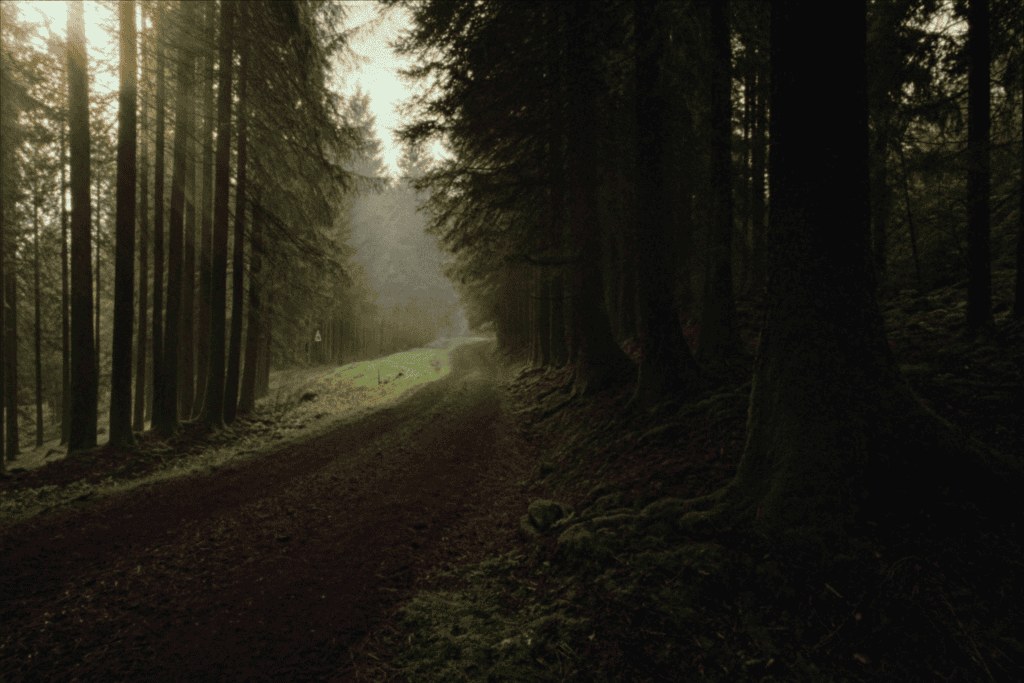
It’s not that nature is magic, whatever the guy selling $400 hammocks on Instagram wants you to believe. It’s that a wilderness reset strips away the props. No phone signal to hide behind. No meeting to duck into the second a hard thought surfaces. No fridge to raid so you don’t have to feel something. Just your own mind, a body finally doing real work again, and — if you let it — God, in the quiet you’ve spent years successfully avoiding.
Physically, it costs you something, and that’s the point. A ridge doesn’t care about your job title. Cold water doesn’t negotiate with your ego. There’s an honesty in a body that’s tired the right way — the kind of tired that clears static instead of adding to it, unlike whatever “tired” you’re doing at your desk chair right now. That’s the physical half of a wilderness reset, and it matters more than people give it credit for.
Spiritually, it does what comfort never will: it makes room. You cannot out-strategize a midlife crisis. You cannot think your way out of a faith gone stale or a purpose that quietly evaporated somewhere around your second minivan. Sometimes you have to walk into the woods and let God dismantle what needs dismantling — because left to your own devices, you were never handing it over voluntarily from the recliner. That’s the whole spiritual case for a wilderness reset in one sentence.
This isn’t about becoming a different guy
Let’s be clear, because somebody’s about to take this the wrong direction: this isn’t about buying $600 of gear, growing a beard you can’t actually maintain, and calling it a wilderness reset. A real wilderness reset isn’t a costume. It’s a posture — a willingness to be uncomfortable long enough for something true to actually surface. That can happen on a week-long backcountry trip. It can also happen on a Tuesday morning hike before work, if you have the discipline to leave the phone in the truck and let silence do what silence does. It doesn’t have to happen alone forever, either — plenty of guys find it easier the second time, with other men who get it.
The point was never the mileage. The point is what you stop being able to outrun once the noise finally shuts off — and that’s what separates a real wilderness reset from a nice walk.
Where to start your wilderness reset

You don’t need a permit for Denali. You need one afternoon, one trail near you, and enough discipline to leave the phone behind — yes, even the “emergencies only” excuse you’re already rehearsing. Go alone if you can manage it. Let the quiet run longer than feels comfortable; it’s supposed to. Bring a question instead of an answer — something you’ve been quietly avoiding for a year or three — and see what’s waiting by the time you hit the trailhead again. If you need a hand figuring out where to start or what to bring, that’s what the resources page is for.
Midlife isn’t a crisis to survive. It’s a summit to climb. But nobody’s climbed a summit from a recliner, and you’re not going to start now. You climb it one honest, uncomfortable mile at a time — one wilderness reset at a time, if that’s what it takes — and most men find out God’s been waiting at mile six the whole time, patiently, the way He tends to do.